As artificial intelligence continues to reshape the digital world, its impact on search engines has increased. Search is no longer just about typing a few keywords into a box. Today, AI-driven tools like ChatGPT, Google Gemini and Perplexity are transforming how people ask questions – and how they expect to get answers.
AI-powered search is about matching a consumer’s intent, not just keywords. This shift signals that SEO for AI-powered results is no longer optional – it’s essential. And it even has its own name – GEO! (Generative Engine Optimisation).
This guide explores why GEO is essential, what it involves, and how organisations can adapt to meet this exciting new challenge.
Why GEO matters
Traditional search engines like Google have historically relied on matching keywords to serve users a list of links. But AI search engines, including Google’s own Gemini, go a step further. Instead of merely pointing users to possible resources, they often deliver direct, conversational answers.
This change has significant implications because AI prioritises the best answers, not merely the best-optimised web pages. Here’s why that matters now more than ever:
- The preference for precise answers
Modern users increasingly prefer conversational AI tools because they deliver quick, clear answers – no need to sift through countless links.
Aleyda Solis, an international SEO consultant, warns: “If you don’t answer the user’s question directly, someone else will, and AI will surface their content.”
Organisations that fail to optimise for these AI-driven interactions risk losing visibility.
- AI understands context, not just keywords
AI search focuses on contextual understanding. Rather than matching exact keywords, it interprets the intent behind a query. For example, AI might process “best running shoes for beginners” and prioritise content that explains shoe comfort, fit, or beginner-friendly features, even if the title doesn’t match the query word-for-word.
As Google’s Search Central Blog explains, “AI models are increasingly capable of grasping the meaning behind search queries, rather than the literal words used.”
- Shifts in user behaviour
The rise of smart assistants like Alexa and Siri proves this point further. Voice commands rely on conversational phrasing and require new levels of nuanced optimisation to secure visibility. As voice and AI-driven search become more mainstream, the way we structure our online content will matter more than ever.
Organisations need to rethink and realign their content strategies to leverage these trends.
What does GEO involve?
GEO tactics are not a total departure from traditional SEO, but they do demand a smarter, more user-focused approach. Here’s what matters most:
- Conversational keywords
Traditional SEO often targeted short keyword fragments like “best shoes beginners.” In the world of AI, it’s more effective to create content that answers full-sentence questions. For example: “What are the best shoes for beginner runners?” As Neil Patel of SEO and market research insights platform AnswerThePublic points out, “People are speaking into devices as if they’re talking to a person, and your content needs to reflect that natural language.”
- Comprehensive, high-quality content
AI engines prioritise content that offers value. Rather than scanning for keyword density, they skim for depth. Guides, FAQs, and how-to articles structured with clear headings and answers are more likely to be selected as responses. AI pulls contextually thorough answers from sources it believes are authoritative and comprehensive.
- E-E-A-T Signals (Experience, Expertise, Authority, Trust)
Google’s search practices, for instance, now rely heavily on E-E-A-T principles. AI-driven engines follow suit, giving preference to content backed by credible authors, clear expertise, and precise credibility markers like testimonials or case studies. By building trust and proving your expertise in every piece of content you publish, AI will reward your investment, as it is trained to detect and present content that has indications of authority.
- Optimised images and multimedia
AI doesn’t ignore visuals. Content supporting its answer needs optimised images with descriptive alt text or videos that enhance the user experience. Marketing portal HubSpot emphasises this point, “Visual content – when clearly labelled and accessible – now plays a direct role in AI selection for featured answers.”
How organisations can adapt GEO
Staying ahead in the world of AI-powered search means acting swiftly and strategically. At Content Empire, we recommend these practical steps to future-proof your GEO efforts:
- Audit your content for relevance and depth
Perform a detailed review of your existing content. Is it answering real, user-based questions? Update outdated articles and restructure them to suit conversational-style queries.
- Target long-tail keywords
Gone are the days of short, vague keywords. Start focusing on long-tail ones that mirror natural dialogue. Tools like AnswerThePublic can help identify these conversational phrases.
- Leverage natural language in content
Use clear, conversational language to explain complex topics. Bulleted lists, how-to guides and rich FAQs improve your chances of being selected as an AI result. Always write for real people, not just algorithms.
- Build trust with authenticity
AI systems scrutinise authority. Showcase your expertise by publishing thought leadership content – a bit like this very article! Include author bios, client testimonials and research-backed data to boost the trust factor.
Keep up with advances in AI technology, like new GPT models or updates to tools like Google Gemini and Perplexity. Attend webinars, subscribe to industry newsletters, and stay connected with thought leaders.
Don’t leave your business’s AI search results to chance. Run your own queries in AI tools like ChatGPT, Google Gemini, or Perplexity. Try prompts your customers might use to find your services. If your brand or insights aren’t appearing – or if the AI gets details wrong – that’s your cue to refine your content. See our four favourite prompts below to test your business’s GEO.
Final thoughts
Adapting to AI search tactics and improving your GEO isn’t just another box to tick on a checklist – it’s essential for long-term visibility and success. Although AI searches currently represent a small portion of total search queries, it is fast changing how people find and consume information. Businesses that ignore these shifts risk falling behind.
By understanding these trends and creating a plan to adjust your content strategy for conversational, intent-driven search, you can position your organisation as a leader in your industry.
At Content Empire, our mission is to help organisations not only keep pace with change, but thrive in it.
Need help applying inclusive approach to your content marketing strategy? Contact us today.


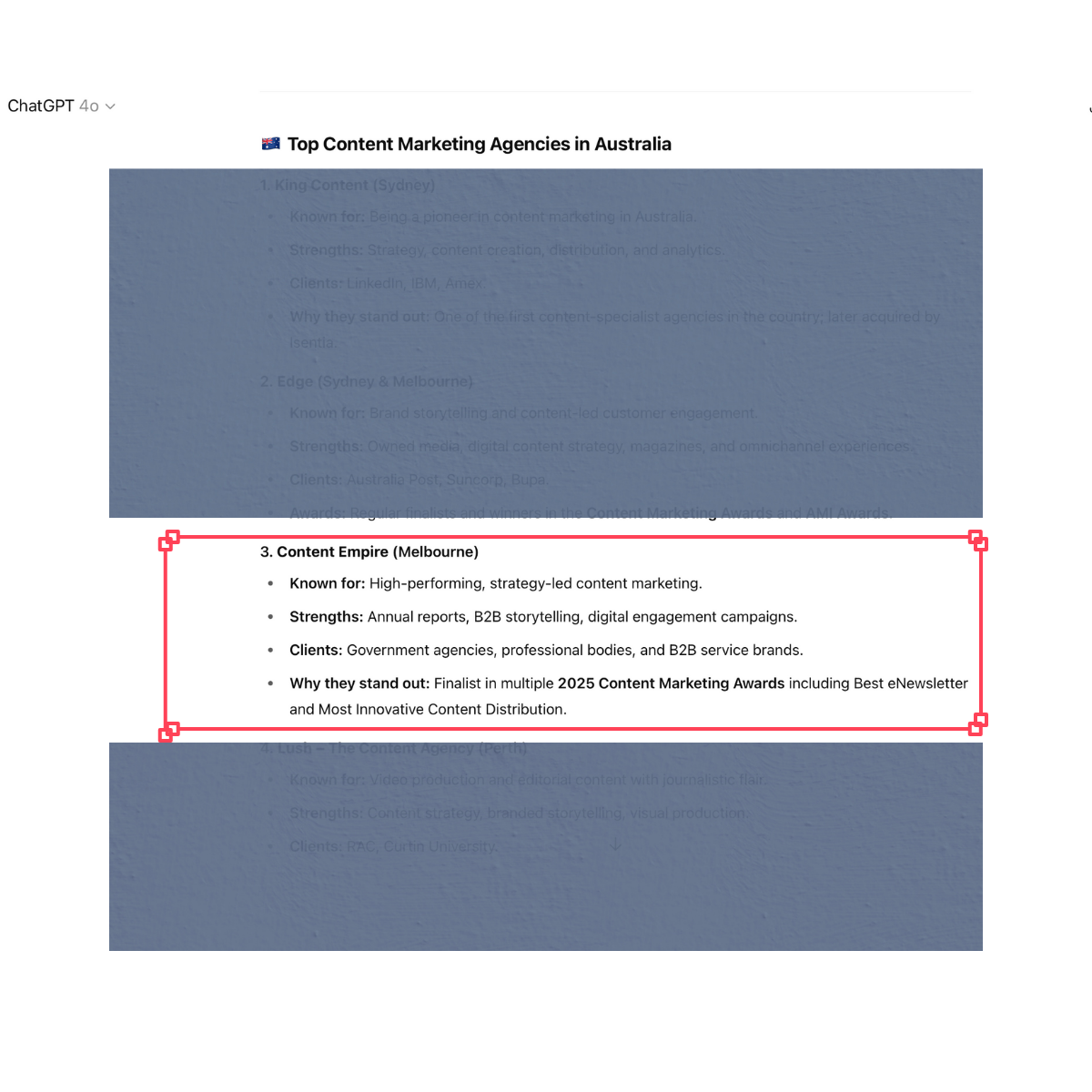
 Ask questions your customers would ask.
 Check for branded visibility.
 Look for your thought leadership or content.
 Compare with competitors.